
November 10, 2026 — Maverick Pools
If you’re planning a new pool in Boise, Meridian, Eagle or anywhere in the Treasure Valley, an automatic cover is a great thing to ask about early. With the turn of a key, the cover rolls across the water and gives you a safety layer, holds in heat, and cuts down on evaporation and debris. It also has to live through an Idaho winter, so it’s worth understanding how it works before you design around it.
Here’s a plain English look at what an automatic cover does, how it fits into your permit, how it handles snow and freezing weather, and why design is the right time to decide.
Quick note: we’re pool builders, not code officials or cover manufacturers. Your city or county has the final word on your permit, and your cover manufacturer’s manual always wins on use and care.
An automatic pool cover is a motorized cover that extends over the pool and retracts back onto a reel, usually with a key switch. On a new gunite pool, the tracks can be hidden under the coping and the mechanism can sit below the deck, so you mostly see a clean pool edge when the cover is open.
Not every motorized cover is a safety cover, though. The standard that matters is ASTM F1346, a national performance specification for safety covers. According to ASTM, it’s intended to reduce the risk of drowning by inhibiting access to the water by children under five, when the cover is installed and used the way the manufacturer says. To meet it, a cover has to pass tests for weight support, gaps at the edges, surface drainage and openings.
For a typical backyard pool wider than eight feet, the static load test requires the cover to hold 485 pounds, roughly the weight of two adults and a child, so a rescue is possible. Powered covers also have control requirements. The switch has to be mounted where you can see the whole pool, and the cover stops when you let go of the key. When you shop covers, ask for proof that the exact model meets ASTM F1346.
It can be part of an approved barrier plan. Ada County’s pool permit application lists both an automatic cover and a fence as barrier options. The City of Boise’s Residential Swimming Pool Submittal Checklist says that when an auto cover is used as the barrier, it should be shown in the pool plan and the section view of your permit drawings.
That means the decision belongs in the design phase, not after the pool is built. If your permit plans are built around a fence and you add a cover later, or the other way around, your barrier plan may need to change. For more on permits, see our walkthrough of pool permits in Boise.
One honest point: a cover only protects anyone when it’s closed. Some families love the open yard feel of a cover. Others choose a fence plus a cover for an extra layer of peace of mind. Both can be great choices, and we’re happy to talk through them with you.
Idaho summers are hot and dry, and dry air pulls water off a pool fast. The U.S. Department of Energy calls covering a pool when it isn’t in use the single most effective way to reduce pool heating costs, with savings of 50 to 70 percent possible. The reason is evaporation, which is by far the largest source of a pool’s energy loss.
The EPA’s WaterSense program says solid pool covers can cut evaporation by more than 90 percent when in use. WaterSense also recommends designing the pool from the start to accommodate a cover and its equipment, like the reel and motor.
For Treasure Valley families, that adds up to warmer water on cool spring and fall evenings, fewer top offs during the dry heat of July, and less debris in the pool after a windy day. A cover also helps keep cottonwood fluff and leaves out of the water.
Boise gets real winter. National Weather Service climate data for the Boise airport puts the average first fall freeze around October 21 and the average first hard freeze around October 31. So if your automatic cover will stay closed over the pool all winter, it needs to be cared for the right way.
Here’s what cover manufacturers consistently say:
You’ll still winterize the rest of the pool: balance the water, blow out and plug the lines, and drain the equipment. The industry guidance from the Association of Pool and Spa Professionals is that with an automatic cover, the water should be no lower than the bottom of the skimmer mouth. For the bigger seasonal picture, read our guide to gunite pool maintenance in Idaho.
Automatic covers are easiest to build in when they’re part of the plan from day one. Cover manufacturers note that most new rectangular gunite pools can use a track hidden under the overhanging coping, but the provisions for that track have to be made before construction. Freeform pools can still get a cover through techniques like a slightly raised rectangular deck around the pool, or a low profile track mounted on the deck.
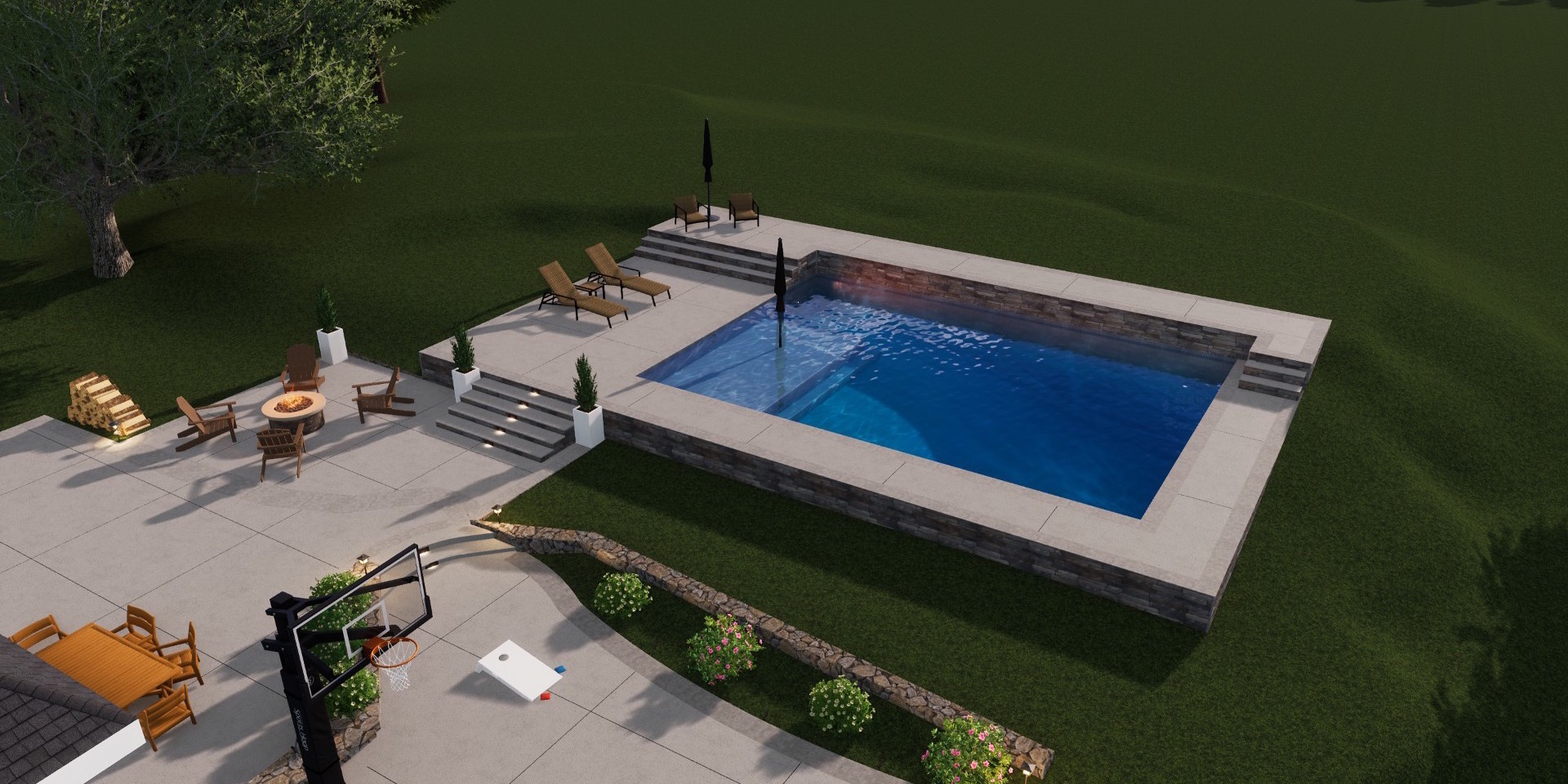
In other words, the cover affects your pool’s shape, coping, deck layout, equipment location and your permit drawings. That’s exactly why we start every project with a free design consultation and 3D design. You get to see how a cover fits the shape, steps and features you want before anything is dug.
From there, Maverick prepares and submits your permit package, coordinates the licensed Idaho engineer who stamps the structural calcs, and schedules inspections. If you live in an HOA, we’ll help with your HOA design package too. You have one point of contact the whole way.
Late fall and winter are a smart time to start. If you plan your pool build before the ground freezes, or use the winter months for design and permitting, you’re in a great spot for spring. Curious about budget? Start with our guide on what a custom pool costs in the Treasure Valley, and check out our financing options. Financing available through Lyons Financial, subject to lender approval.
Is an automatic pool cover a safety cover?
Only if it meets ASTM F1346, the national performance specification for pool safety covers. That standard tests weight support, edge gaps, surface drainage and openings, and powered covers must also meet control requirements. Ask for proof that the exact model meets ASTM F1346.
Can an automatic pool cover be used instead of a fence in the Boise area?
It can be part of an approved barrier plan. Ada County’s pool permit application lists both an automatic cover and a fence as barrier options, and the City of Boise asks that an auto cover used as a barrier be shown in the pool plan and section view of the permit drawings. Your city or county makes the final call.
Can you leave an automatic cover on all winter in Idaho?
Many owners do, but manufacturers say you must keep the pool water at the right level, leave the cover pump on the cover and plugged into a GFCI outlet, and never try to break up snow or ice or run the cover while anything is on top of it.
Does a pool cover really save heat and water?
Yes. The U.S. Department of Energy says covering a pool when it isn’t in use can save 50 to 70 percent on pool heating, and the EPA’s WaterSense program says solid covers can reduce evaporation by more than 90 percent when in use.
Can I add an automatic cover to a freeform pool?
Often, yes. Cover manufacturers describe options like a slightly raised rectangular deck that hides the tracks, or a low profile track mounted on the deck. Rectangular pools are the simplest fit, and either way it should be planned during design.
When should I decide on an automatic cover?
During design, before construction. Hidden tracks need provisions built in before the shell and coping go in, and if the cover is your barrier it needs to appear in your permit drawings.
Whether you’re looking for a pool builder in Boise, a pool builder in Meridian, or a pool builder in Eagle, we’d love to help you plan a pool that’s safe, warm and built for Idaho seasons. We also handle pool remodels, including plaster, tile and equipment, plus patios, outdoor kitchens, fire features, pool and spa packages, and full backyard transformations.
Ready to see your backyard in 3D? Book your free design consultation and let’s start planning your pool today.
Every project starts with a free design consultation.